 Image 1 of 2
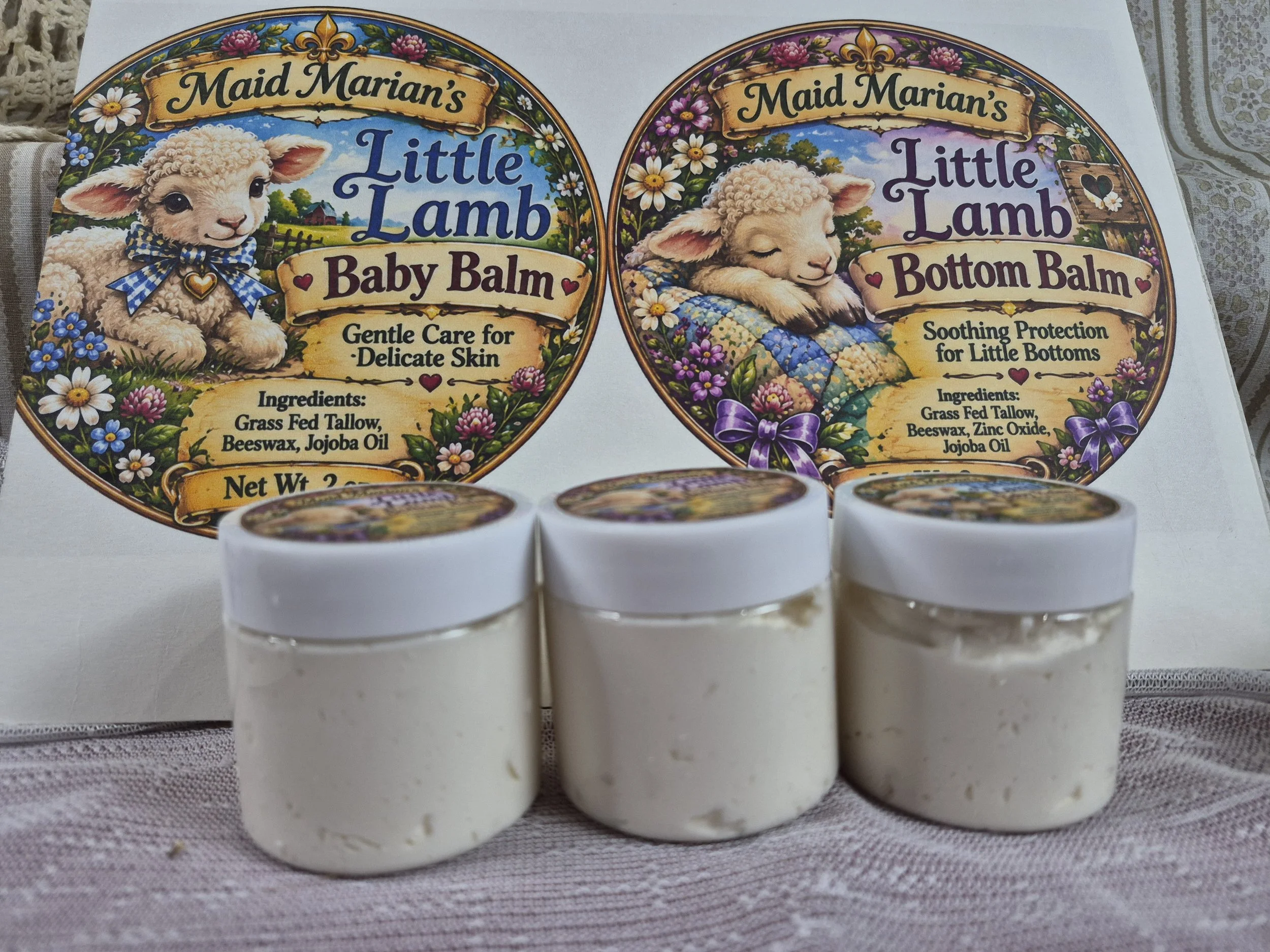 Image 2 of 2
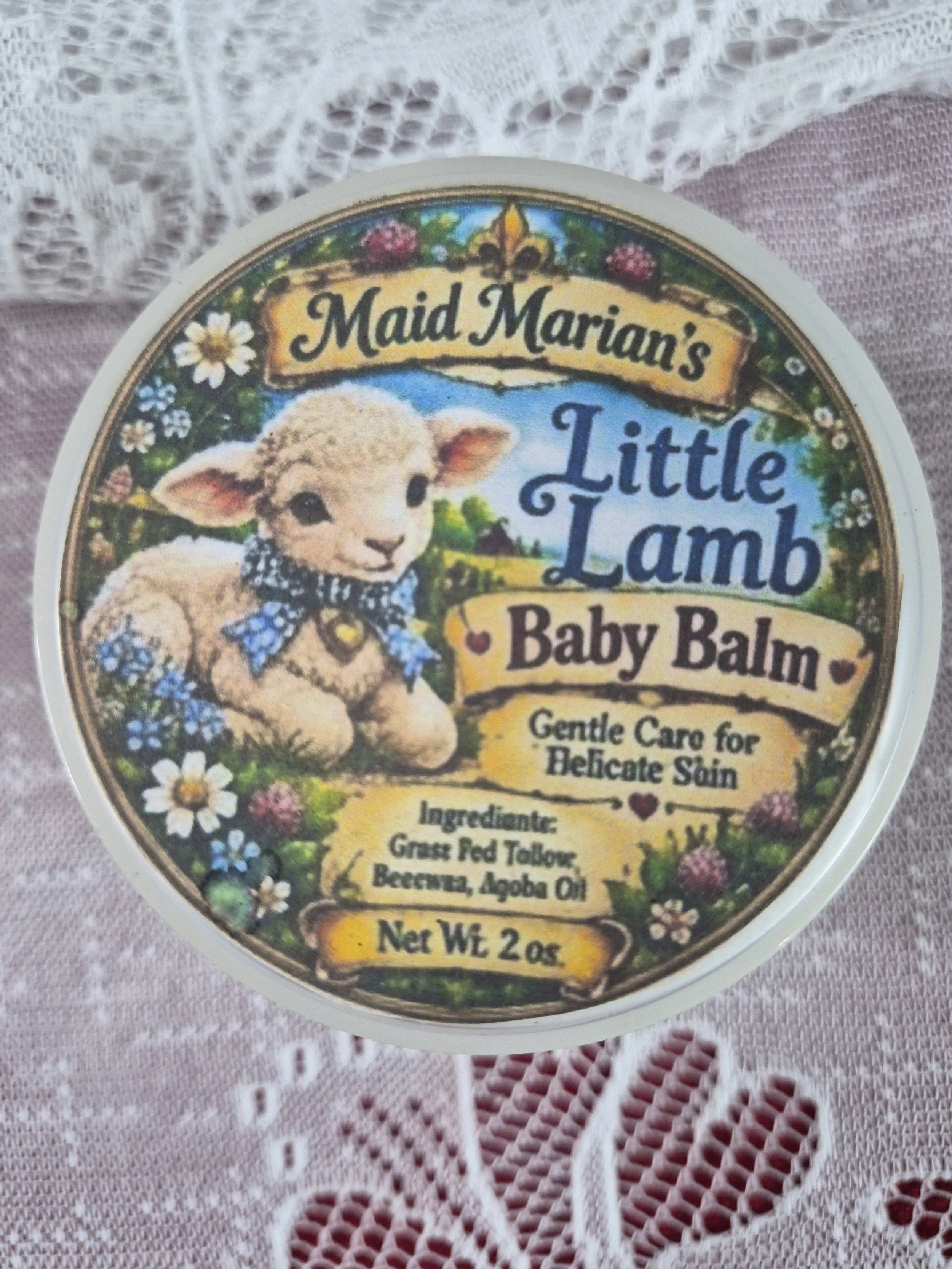
Baby tallow balm is a moisturizing skin salve made from rendered grass-fed beef tallow—blended with a small selection of skin-safe oils and sometimes beeswax or essential oils. It’s formulated for delicate infant skin, emphasizing gentle, nutrient-rich ingredients and minimal additives.
Key characteristics
Texture: Soft, creamy, and slightly dense; melts on contact with skin from body heat.
Scent: Mild, often described as neutral or subtly meaty; formulations may be lightly scented with non-irritating calming notes (e.g., chamomile).
Color: Pale ivory to light yellow, depending on the tallow source and any added oils or botanicals.
Shelf life: Long-stable compared with many plant-only oils, typically several months to a year when stored cool and dry; absence of water reduces spoilage risk.
Why it’s used
Moisturization: Tallow closely resembles the fatty acid profile of human skin sebum, providing rich emollience and forming a protective barrier to prevent moisture loss.
Skin barrier support: High concentrations of saturated and monounsaturated fats help repair and maintain the skin’s lipid layer, which can be helpful for newborn dryness, chapping, and mild eczema.
Nutrient content: Naturally contains vitamins A, D, E, and K in trace amounts, along with conjugated linoleic acid and other fats that can support skin health.
Minimalist ingredient list: Often marketed for parents seeking simple, whole-animal skincare without synthetic preservatives, fragrances, or emulsifiers.
Common uses
Daily baby moisturizer for face, body, and diaper area.
Barrier balm to protect against moisture and irritation in the diaper region.
Soothing balm for cradle cap or mildly dry patches (patch-test recommended).
Gentle massage balm for newborn skin-to-skin care.
Safety and considerations
Patch test: Always test on a small area before regular use to check for sensitivity or allergic reaction.
Source and rendering: Quality depends on sourcing and rendering methods; grass-fed, properly rendered tallow is preferred for purity and lower risk of contaminants.
Allergy and ethics: Not suitable for those with specific animal-product allergies or families who avoid animal-derived products for ethical or religious reasons.
Infant skin caution: Avoid applying balm into skin folds where moisture can be trapped excessively; consult a pediatrician before use on broken skin or severe eczema.
Preservative-free formulations: Because many tallow balms exclude water and preservatives, they are less prone to microbial growth but should still be stored cleanly and used within recommended timeframes.
Application tips
Warm a small amount between clean fingers until it softens, then apply a thin layer and massage gently.
Use sparingly in the diaper area—enough to protect but not so much that it prevents airflow.
Keep containers closed and hands clean to extend product life.
Overall, baby tallow balm is a simple, nutrient-dense moisturizer favored by caregivers for its emollient properties and close compatibility with infant skin lipids. Consider quality of ingredients, perform a patch test, and consult a pediatrician for newborns with persistent or severe skin issues.