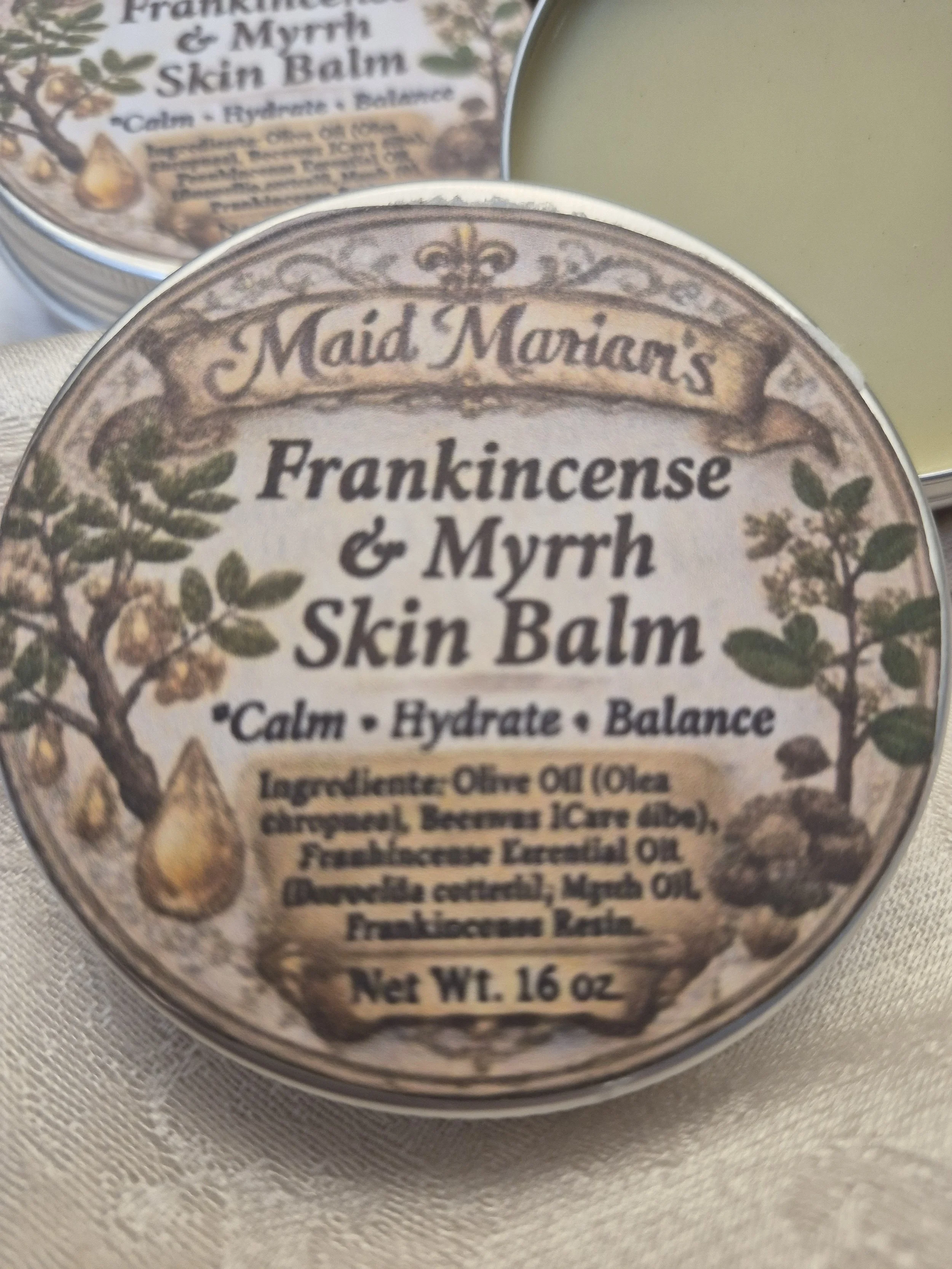
 Image 1 of 2
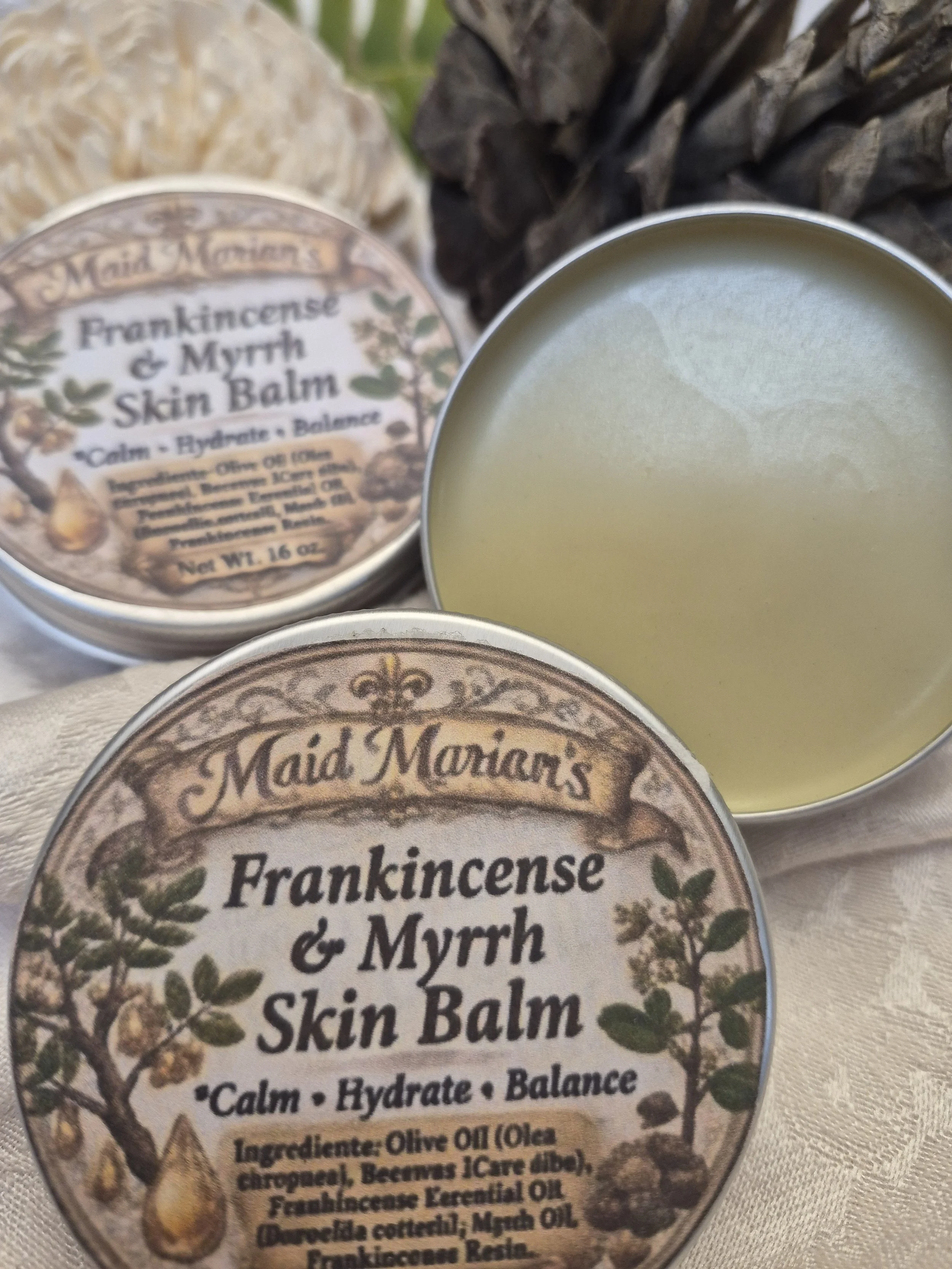 Image 2 of 2
Frankincense and myrrh salve is a topical balm made from the resin-derived essential oils of Boswellia (frankincense) and Commiphora (myrrh) trees, blended into a carrier base such as beeswax, coconut oil, jojoba, or shea butter. Traditionally used in aromatherapy, folk medicine, and spiritual rites, this salve combines the aromatic, anti-inflammatory, and wound-care properties attributed to both resins.
Appearance and texture
Typically a smooth, semi-solid balm that softens at skin temperature.
Color ranges from pale amber to deep brown, depending on the proportions and carrier oils used.
Aroma is rich and resinous: frankincense contributes a fresh, slightly citrusy, pine-like note; myrrh adds a warm, bitter, balsamic, and smoky depth.
Key components and actions
Frankincense (Boswellia):
Contains boswellic acids and volatile terpenes.
Commonly credited with anti-inflammatory, astringent, and skin-healing effects.
Often used to soothe minor skin irritations, reduce redness, and support skin tone and texture.
Myrrh (Commiphora):
Contains resins, sesquiterpenes, and commiphoric acids.
Traditionally used for its antiseptic, antimicrobial, and wound-healing properties.
Frequently applied to cracked skin, minor cuts, or dry, chapped areas.
Common uses
Topical relief for dryness, cracked skin, chapped lips, and minor abrasions.
Support for skin that is inflamed or irritated (e.g., mild dermatitis), when used as a supportive soothing product.
Aromatic application for relaxation, meditation, and grounding practices.
As part of a nighttime skin-care ritual to provide concentrated moisturizing and protective barrier effects.
How to use
Apply a small amount to clean, dry skin and massage until absorbed.
For lips or small cracks, use sparingly and reapply as needed.
For larger areas, warm the salve between fingers before spreading.
Perform a patch test on a small skin area if you have sensitive skin, allergies, or are pregnant — essential oils and resin extracts can cause irritation or sensitization in some people.
Safety and considerations
Essential oils and resin extracts are concentrated; overuse can cause irritation.
Avoid applying to deep or infected wounds without professional medical advice.
Some individuals may have allergic reactions to frankincense, myrrh, or carrier oils.
Pregnant or breastfeeding people and those on certain medications should consult a healthcare provider before regular use.
Product quality varies: look for salves made with pure essential oils or CO2 extracts and natural, minimally processed carriers for best results.
Storage and shelf life
Keep in a cool, dry place away from direct sunlight.
Properly prepared salves typically last 12–24 months; natural antioxidants in the recipe (like vitamin E) can help extend shelf life.
In summary, frankincense and myrrh salve is a traditional, aromatic balm prized for moisturizing, soothing, and mildly antiseptic properties. When formulated and used appropriately, it can be a useful product for dry, chapped, or mildly irritated skin and a comforting addition to self-care or ritual practices.