 Image 1 of 3
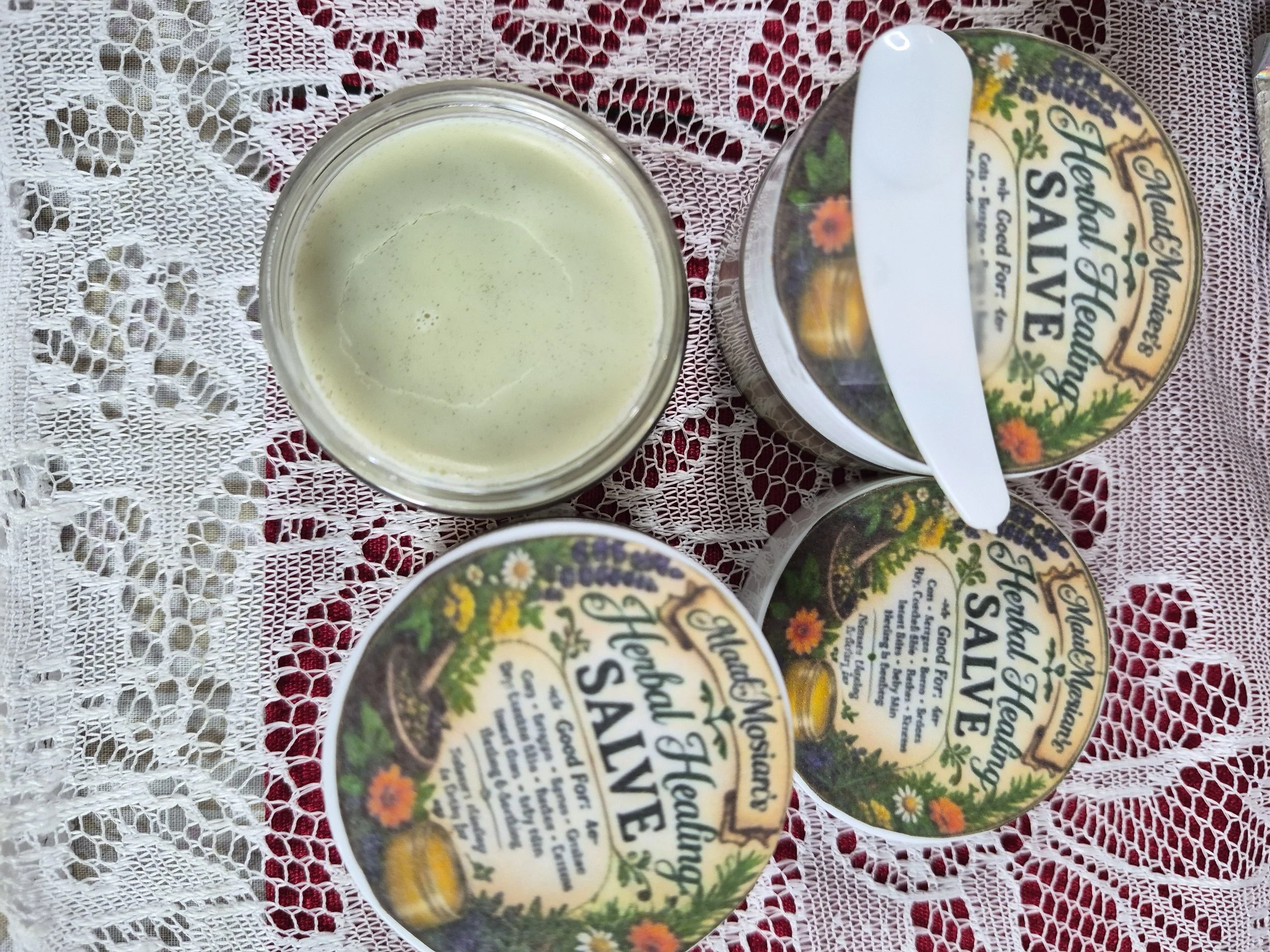 Image 2 of 3
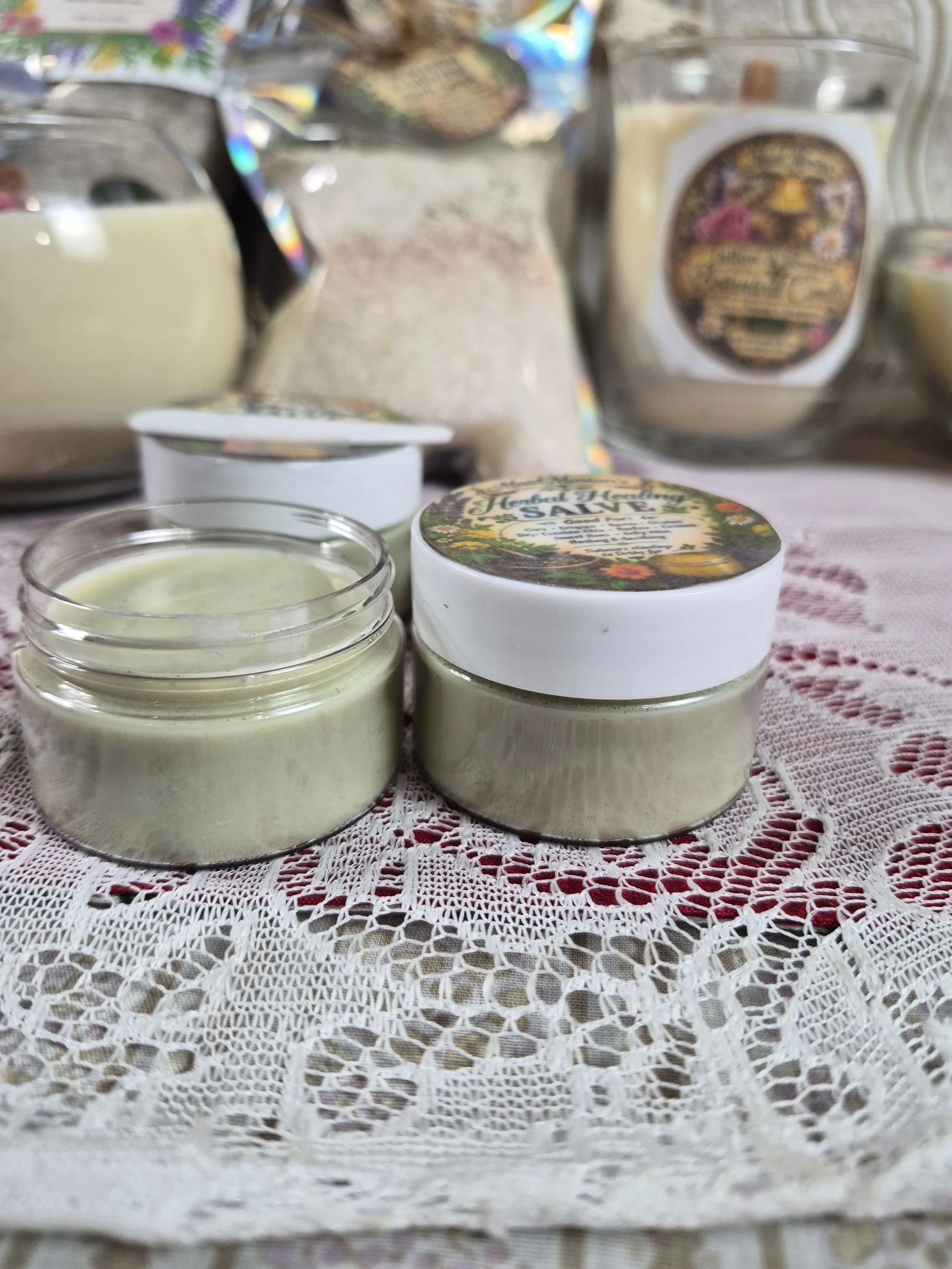 Image 3 of 3
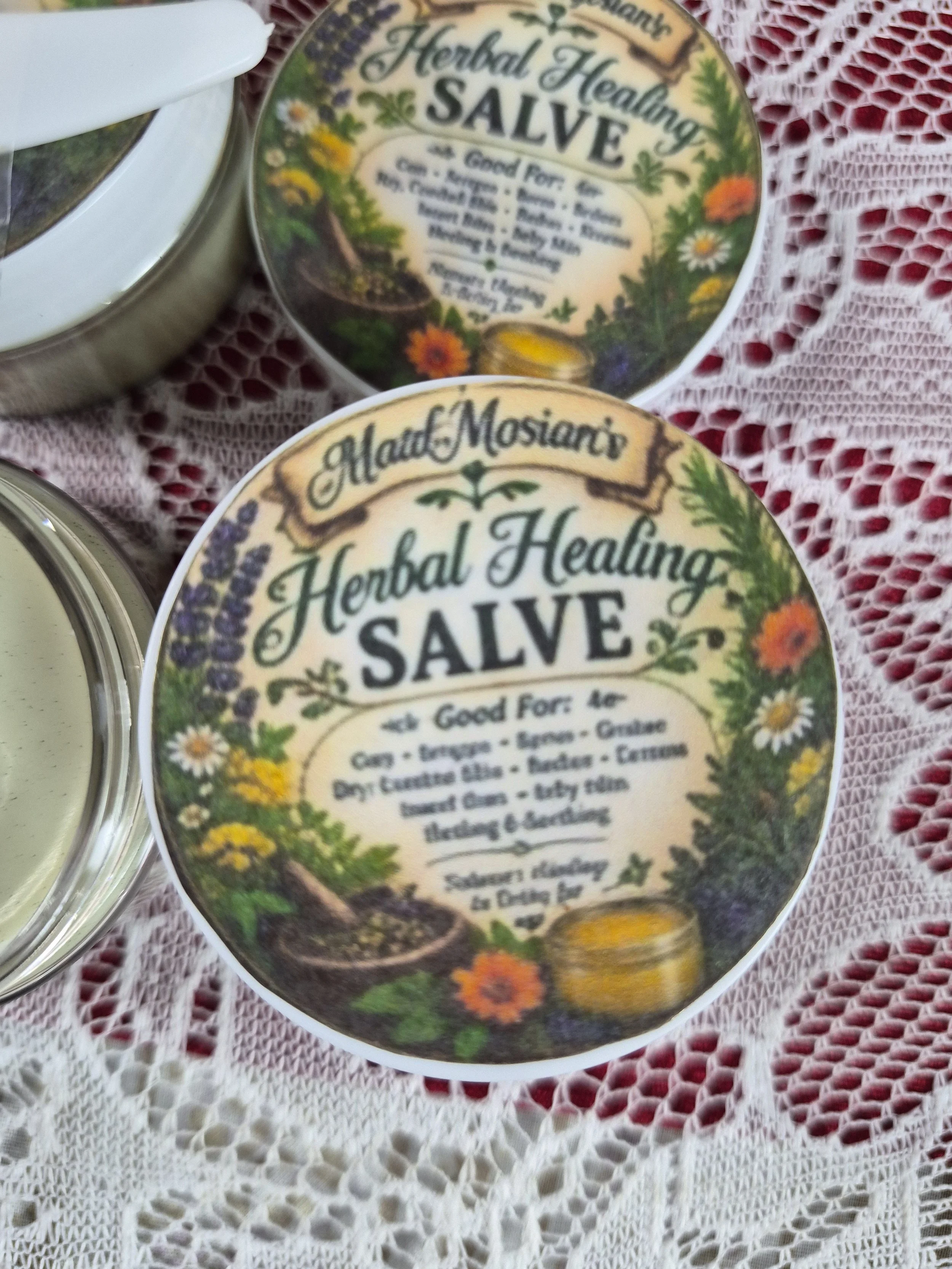
Herbal healing salve is a semi-solid topical preparation made from plant-based ingredients and a carrier base, formulated to soothe, protect, and support the skin’s natural repair processes. Salves are typically oil- or butter-based rather than water-based, which creates a protective, occlusive layer that helps retain moisture and shield injured or irritated skin from further irritation.
Common components
Carrier oils and butters: olive oil, sunflower oil, jojoba oil, fractionated coconut oil, shea butter, or cocoa butter provide a nourishing, emollient base and help deliver botanical actives into the skin.
Beeswax or plant waxes: beeswax, candelilla wax, or carnauba wax give the salve body and create a barrier that seals moisture in and keeps contaminants out.
Herbal infusions and extracts: calendula, comfrey, plantain, lavender, chamomile, arnica, yarrow, and rosemary are frequently used for their anti-inflammatory, antimicrobial, astringent, or cell-stimulating properties. Herbs are typically infused into the carrier oil (cold infusion, heat infusion, or maceration) to transfer their constituents.
Essential oils and tinctures: small amounts of essential oils (tea tree, lavender, helichrysum) or alcohol/ glycerin tinctures may be added for additional antimicrobial, anti-inflammatory, or aromatic benefits. These are used sparingly due to potential skin irritation.
Antioxidants and preservatives: vitamin E oil or rosemary antioxidant extract can help slow rancidity in oil-rich formulations. Water-containing salves require appropriate preservatives to prevent microbial growth.
Typical uses
Minor cuts, scrapes, and abrasions: helps keep wounds clean and moist to promote faster epithelialization.
Dry, cracked or chapped skin: nourishes and protects fissured areas such as hands, lips, heels, and cuticles.
Minor burns and sunburn: soothes and supports healing when applied to superficial injuries (avoid on large or severe burns without medical advice).
Insect bites, mild rashes, and skin irritation: reduces itching and inflammation for mild reactions.
Supporting scar maturation: some salves may reduce tightness and dryness as scars mature, though claims about scar elimination should be made cautiously.
Formulation notes and safety
Patch test before broad use: test a small area to check for allergic reactions, especially with essential oils, nut-based carrier oils, or certain botanicals (e.g., comfrey contains pyrrolizidine alkaloids that can be harmful if used extensively or on broken skin).
Clean technique: prepare salves with clean utensils and containers; if water is introduced, use proper preservation to prevent microbial growth.
Concentration and application: a thin layer is usually sufficient; reapply as needed. Avoid occlusive application over infected, necrotic, or extensively damaged tissue without medical supervision.
Regulatory and therapeutic claims: avoid asserting cures for specific medical conditions without appropriate evidence or approvals. Use herbal salves as supportive skin care and first-aid adjuncts rather than replacements for professional medical treatment when needed.
Storage and shelf life
Store in a cool, dark place to extend shelf life. Typical shelf life ranges from 6 months to 2 years, depending on the oils used and whether antioxidants are included.
Signs of spoilage include off smells, discoloration, or visible mold. Discard if any contamination is suspected.
In summary, herbal healing salves are oil-based topical preparations that combine emollient carriers, protective waxes, and botanical extracts to support skin repair, soothe irritation, and maintain moisture. When made and used with attention to safety, they are a useful, low-tech option for managing minor skin issues and maintaining skin health.