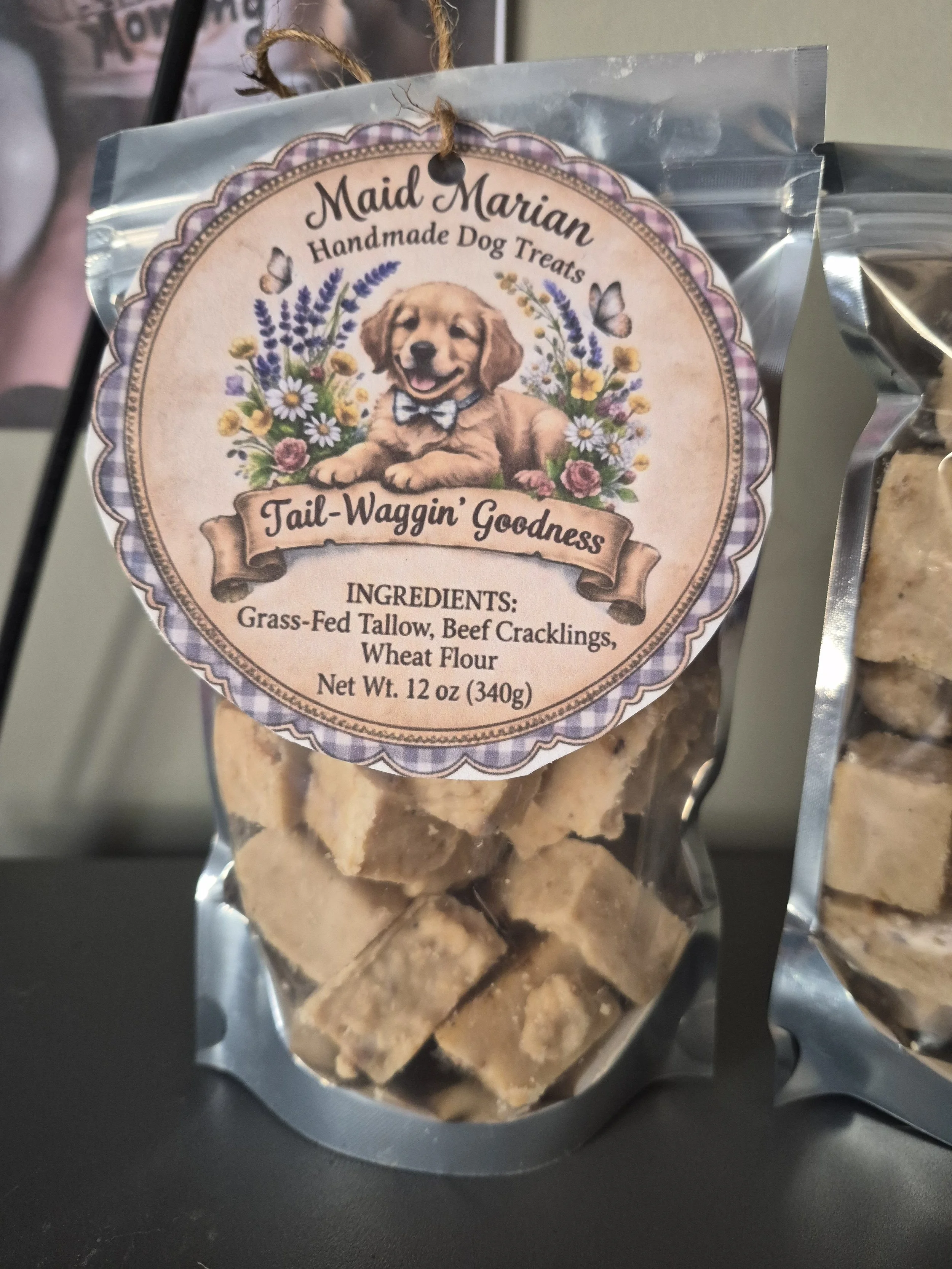
 Image 1 of 2
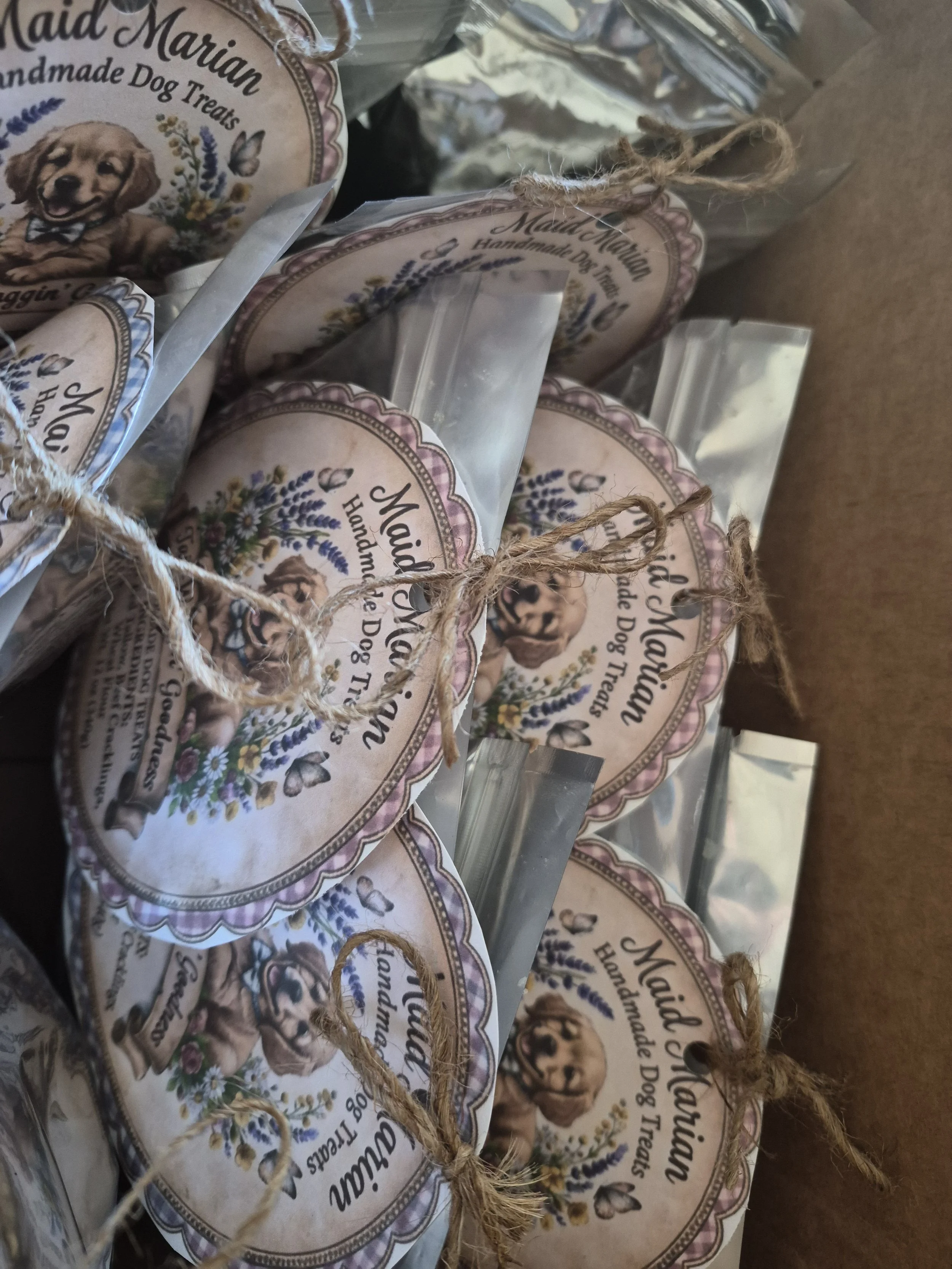 Image 2 of 2
Natural Dog Treats
Natural Tallow Dog Treats
Source and composition: Rendered beef tallow is the purified fat from cattle, minimally processed to remove water and impurities. It’s composed primarily of saturated and monounsaturated fatty acids, plus small amounts of fat-soluble vitamins (A, D, E, K) and trace minerals.
Texture and form: Usually sold as solid blocks, chips, or small bite-sized morsels that become softer at body temperature. Chewing variants can be firm but pliable, and some are molded into chewable shapes or combined with other ingredients.
Flavor and aroma: Rich, beefy, and savory with a pronounced animal-fat scent that most dogs find highly palatable.
Benefits for dogs:
Nutrient-dense energy: High-calorie, concentrated source of digestible energy for active, working, or underweight dogs.
Skin and coat support: Provides fatty acids and fat-soluble vitamins that can contribute to healthier skin and shinier coats.
Digestive tolerance: Often easier on sensitive stomachs than highly processed snacks; limited-ingredient offerings reduce allergy risks for dogs sensitive to grains or additives.
Natural preservative properties: Tallow has stability at room temperature when properly rendered and stored; it resists rancidity better than some unsaturated oils.
Usage and feeding guidance:
Serve as occasional treats, training rewards, or as a topper to add calories to meals.
Because of high calorie density, adjust daily food intake to prevent weight gain. Use in moderation, especially for overweight or less active dogs.
Introduce gradually to avoid gastrointestinal upset.
Storage and safety:
Store in a cool, dry place or refrigerate/freeze for longer shelf life. Keep sealed to limit exposure to light and air.
Use human-grade, properly rendered tallow without seasoning, salts, or spices. Avoid added onion, garlic, or other toxic ingredients.
Considerations:
Not appropriate as a primary diet due to lack of complete nutrient profile.
Monitor dogs with pancreatitis, obesity, or fat-sensitive conditions; consult a veterinarian before offering high-fat treats.
Ensure the source is from reputable suppliers to avoid contamination.
Beef Crackling Dog Treats
Source and composition: Beef cracklings (also called pork/veal or beef rinds when derived from cattle) are the crisped, roasted or fried pieces of beef fat and connective tissue left after rendering or roasting. They are primarily composed of dehydrated fat and collagen.
Texture and form: Thin, crispy, crunchy pieces or chips that shatter or break easily under chewing. The crisp texture provides mechanical dental abrasion that can help remove some plaque and tartar.
Flavor and aroma: Strong roasted beef flavor with an appealing crunchy mouthfeel that many dogs strongly prefer.
Benefits for dogs:
Dental stimulation: Crunchiness helps scrape soft plaque from teeth during chewing and encourages prolonged chewing, which can reduce boredom and anxiety.
High palatability: Intense flavor makes them effective training incentives or high-value rewards.
Protein and collagen: Depending on preparation, they may contain small amounts of protein and connective-tissue-derived collagen, which can be beneficial for joints and skin.
Usage and feeding guidance:
Given as occasional treats; monitor portion sizes because of calorie and fat content.
Best for dogs that can safely chew hard items; supervise to prevent choking or ingestion of large brittle fragments.
Introduce slowly to assess digestive tolerance.
Preparation and safety:
Ideally made simply—dried or roasted without added salt, spices, or seasonings that are harmful to dogs.
Avoid pieces that are too hard for small breeds or dogs with dental disease.
Store in an airtight container in a cool, dry place; refrigerate or freeze for extended freshness.
Considerations:
May be high in fat and calories; not suitable for dogs with pancreatitis, obesity, or fat-intolerance.
Risk of sharp brittle fragments—monitor chewing and remove large shards.
Choose cracklings sourced from reputable processors to minimize contamination and ensure proper cooking.
Summary Comparison
Tallow treats are soft-to-firm, highly fatty, and energy-dense—best as occasional calorie boosts or meal toppers and gentle chews for scent-driven rewards. Beef cracklings are dry, crunchy, and provide dental stimulation and texture-based engagement but carry a higher risk of brittle fragments and may be harder on digestion. Both should be unseasoned, used sparingly, and selected with attention to source quality and the individual dog’s health needs.